Open Google and type in just about any question. These days, something different happens.
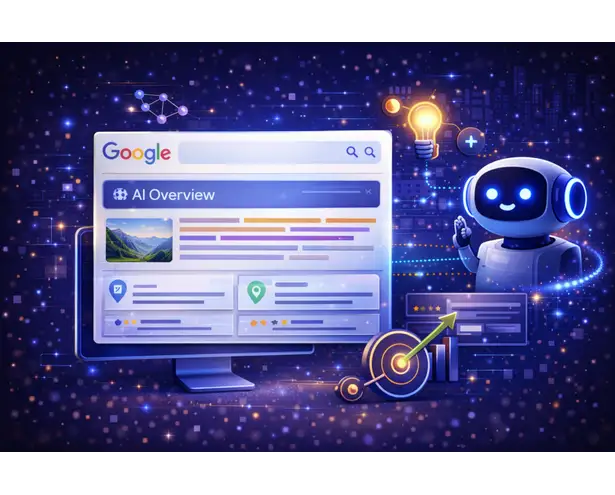
See that box at the top? Before you even get to those familiar blue links, there's usually a summary sitting right there, trying to answer what you asked. That's Google AI Overviews, and it's changing how most of us search online.
Right now, search engines are undergoing a major transformation.
What's happening? How does Google manage to create these summaries, and what does all this mean to those trying to find answers to their queries?
What Does This Box Convey?
You type something into Google. AI Overviews scans many websites and then puts together a summary at the top of your results. No more clicking through five different sites trying to piece information together. The answer's just there.
It’s like you have a friend who has already done all the research. They spent hours, and now they show what really matters. The summary shows up in its own box, usually near the top, with links to the sources.
Featured snippets used to work differently. Google would just copy text from one website and display it. This new system is nothing like that. It reads multiple websites, processes all that information, then writes something original that answers your specific question. Sometimes you get paragraphs, sometimes lists, sometimes images. Often, related questions are suggested at the bottom. It’s not like using conventional digital marketing services.
The Machinery Under the Hood
Google didn't build this overnight. Years of work went into developing language models that actually comprehend questions rather than just hunt for matching words. The system reads context. It figures out what you really mean.
The old search engines looked for words that matched your query. Now it's completely different. When you search: ‘How to remove red wine from white carpet,’ Google understands the situation. You spilled wine, and you need help fixing it fast. The results won't waste your time on wine production history or carpet fiber types. They offer just cleaning solutions.
Google catalogs billions of web pages. The system compiles data and organizes it logically after identifying the most reliable and relevant sources. Your outcomes will vary depending on your questions if you want to comprehend anything difficult, such as instructions that help you with steps, definitions that guide you with vocabulary, and explanations that clarify something.
When Does Google Show These Steps?
Don't expect to see AI Overviews every single time you search. They happen when you ask Google questions that require a somewhat detailed response: when you want to learn about some processes, solve a problem, or figure out something.
You won’t get these overviews during simple navigation searches.
Enter Facebook or ask about Gmail login. You will not see a summary. That’s because Google knows you're trying to access a certain website. Why slow you down with a summary?
Right now, this is mostly a United States thing. Google has been progressively spreading it to more languages and nations. Though there is no definite timetable, they intend to continue growing it.
Why People Like It
Users are loving this overview concept because it saves them time. That's the big one. You don't have to open six tabs, read through each one, and mentally combine everything yourself. The information is already compiled when you land on the results page. Minutes saved per search add up when you're searching constantly.
Difficult subjects become clear-cut. Are you looking into anything that requires gathering data from several sources, such as historical background, technical specs, or medical knowledge? The artificial intelligence ties together many perspectives and bits of information to provide you with one consistent response. When you're stepping into unfamiliar ground, it may be quite beneficial.
Sometimes the summary falls short. That, though, poses no problems. You can grasp the essentials from the overview. Just click the source links, which are immediately available if you wish for more details. Your digital marketing company can help you understand this better.
The Problems Nobody Wants to Discuss
This technology can go wrong. There are documented instances where it provides incorrect or misleading information. Google keeps tweaking things to improve it, but errors still happen regularly.
Website traffic is the real elephant in the room. When people get their answers without ever leaving Google's page, who suffers? Content creators. Publishers, bloggers, and businesses all count on visitors from search. This could absolutely wreck those numbers. People who make the content don't see any benefit while Google serves up their information.
Artificial intelligence occasionally misunderstands things. It combines information from very different settings in a way that seems logical. However, it could be wrong or misleading. Users have expressed concerns about feeling perplexed by answers that appeared correct but conflated different bits of data.
Privacy is another concern. Google has to analyze mountains of data on people's search terms and clicks on results. Naturally, privacy rules exist, but have you considered what's really going on with all the data about your search patterns?
How This Changes the Game
People search differently now. They type longer questions and more natural sentences because they know the AI can handle conversational language. Instead of "cookie recipe soft," they'll search "what's the trick to keeping homemade cookies soft after baking them." They use real questions and complete sentences. It’s not like the usual marketing approach that the best SEO company in the USA offers.
That's actually easier, as you don't have to think like a computer anymore. You just have to pose your question the same way you would in a normal conversation.
Website owners are catching on. The sites that get cited in AI Overviews share certain qualities. They have clear writing and thorough coverage. This is causing content creators to shift their approach. They are focusing on greater depth, greater authority, and less surface-level fluff written just to rank in search results.
Where Is All This Heading
These are early days for AI Overviews. Google is continually refining it to improve accuracy and handle more complex queries. Future iterations might include live data, individualized responses based on your prior searches, and perhaps interactive tools to help you clarify your inquiry.
Other businesses are developing comparable systems. Bing has AI features now. Smaller search engines are working on their own versions. Competition like this tends to accelerate innovation. Search is going to look very different in a couple of years.
Everything's moving toward conversation-based search instead of keyword hunting. The future probably involves search engines that understand what you need and figure out the best way to present it. It is not just finding information. It’s also about understanding requests and delivering customized answers.
Conclusion
Google AI Overviews changes search in fundamental ways. Answers appear immediately at the top instead of making you hunt through links. Information becomes more accessible, but questions pop up about accuracy, giving proper credit to sources, and what happens to websites that create content in the first place.
Quick access to information is great for users. No argument there. But stay critical. When something's important, check the sources yourself. Don't just trust the summary. AI Overviews works well for many things, but it's still a tool with real limitations. Use it smart.